

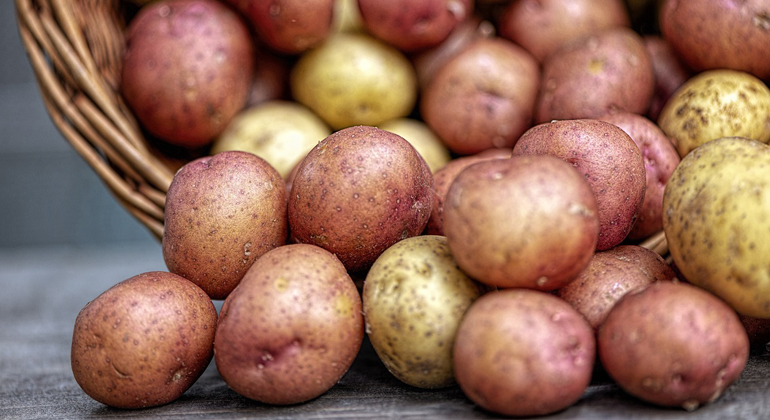
La pomme de terre dans tous ses états

The potato in all its forms

Aromas,  the art of improbable flavor associations.

The flavorist must practice in harmony with nature. Knowledge of the natural mechanisms for generating aromatic active ingredients in fruits and plants will enable bold flavor combinations. So the potato can hide where you least expect it, in fruit aromas.

At the origin of the potato aroma, we find an essential amino acid for health, methionine, identified in quantity in meats, fish and cheeses. Under the action of an aminotransferase, methionine produces 2-oxo 4-methylthiobutyric acid. This acid can evolve into:
  • 3-(methylthio) propanal or methional, a molecule with a cooked potato taste.
  • 3-(methylthio) propanol or methionol tastes like meat and potato broth.
  • Methyl 3-(methylthio) propionate has a sulfur flavor and gives off an exotic green, pineapple or mango note.
  • Ethyl 3-(methylthio) propionate with a metallic note of ripe pineapple.
In association with furaneol, these sulfur molecules, at concentrations of around a hundred ppb in the food, bring to the aromas notes of perfectly ripe, very sweet and juicy fruit and help to reinforce the feeling of a natural taste. You should know that most fruits contain methionine. The most abundant are pineapple (120 mg/kg), followed by banana and peach (100 mg/kg), lychee and mango (80 mg/kg). As a result, the most successful flavors of these fruits will contain methional and associated esters. However, an abundance of good can be harmful and if the quantities of these molecules exceed one hundred ppb in the flavored product, unpleasant notes, foreign to the fruit, may appear. The pasteurization of fruit juices and orange juice in particular corroborates this observation. Under the effect of heat, the quantity of transformed methionine increases and notes of cooked potato unbalance the aroma. Strawberries and citrus fruits contain only 20 to 30 mg of methione per kg. The contribution of sulfur is beneficial to the aroma, but the balancing is subtle. On the other hand, methionine is non-existent in apples and in fact the presence of methional in compositions is of no use. But nature has many resources and also knows how to generate molecules to suggest the ideal apple.

Leave a Comment