

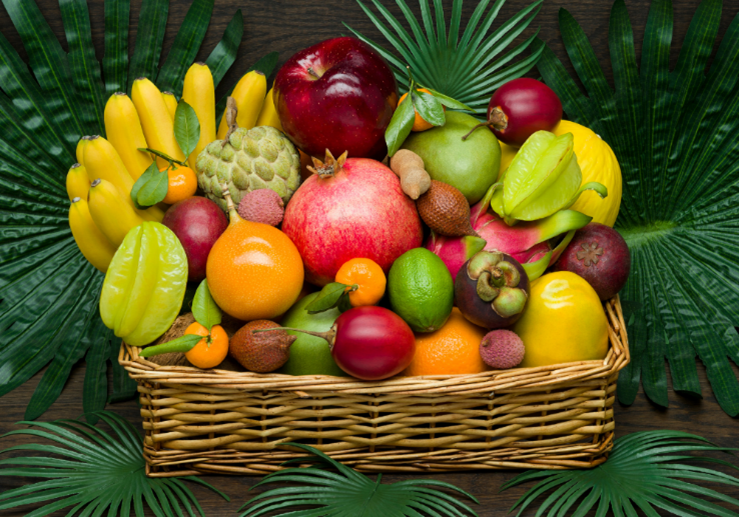
The aroma is an invitation to travel, as much as an open door to dreams and fantasies. Whatever your sector of activity, innovation in flavor will whet the consumer's curiosity and encourage him to try your product. He is motivated in two ways, either he does not know and wants to discover, or he has traveled and has already consumed the fruit or dish whose flavor you are using. It is therefore necessary to have an aroma that is excellent in terms of taste and which faithfully reproduces the taste of the fruit or food. There are still many little-known fruits that are delicious and often beneficial for your health. Flav’Eure solutions can be your partner to develop this new aroma, in a form adapted to your application and meeting your legislative constraints.
Although there are many new flavors, I will arbitrarily present 5 to you.
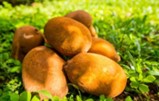
Cupuacu is the fruit of the cupuacu tree which grows in the tropics around the Amazon River. The fruit is brown, covered with a thick skin and can weigh more than one kg. The pulp is clear with a flavor that can be described as a mixture of banana, papaya, pineapple and cocoa. The exotic taste will be innovative and will surprise the consumer in
the drinks and smoothies segment. 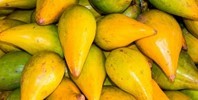
Lucuma, a fruit sacred to the Incas, comes from a tree that grows at altitude in the hot and humid climate of the Andes. This small fruit, reminiscent of an avocado, has a green skin that is too thin, making it impossible to export. The flesh is orange-yellow, similar to that of a pumpkin, and tastes
sweet, mixture of maple syrup and caramelized sweet potato. The fruit lends itself very well to sweet pairings in ice creams and other dairy products, but also to sweet and savory uses, meat marinated with spices and soy sauce for example. Let yourself be surprised by using lucuma aroma in various applications. 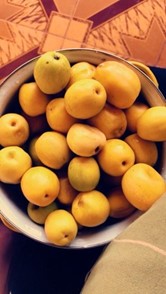
The monkey apple tree or cantoungni, is a tree that grows in the gallery forests of Guinea. The 3 cm long fruits are yellow when ripe, with a juicy, very tangy pulp. Cantoungni is known throughout Guinea and exists in large quantities in Kindia. These fruits are eaten raw because of their very acidic pulp, or cooked to prepare a cold drink from their cooking water with a significant addition of sugar. The flavor of the fruit, ignoring the acidity, is a mixture of apple compote with a touch of pear, the whole being enhanced with a hint of dry prune. A tannic astringency like oak shavings enhances the whole.
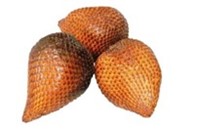
Salak is an exotic fruit with a hard skin covered in brown scales reminiscent of a snake's skin. It surrounds a flesh whose consistency is close to lychee. Its sweet and tangy taste is very popular in Thailand and neighboring countries. The flavor is reminiscent of pineapple. However, Indonesian salak has firm flesh like an apple and its acidic sweet taste is reminiscent of strawberries. By relying on leading scientific publications, which have highlighted aromatic molecules whose contribution to aroma is proven, all compared to sensory experiences, Flav'Eure solutions has worked on the development of many aromas of very exotic fruits such as mombin, medlar, rambutan or lychee, langsat or longan, another relative of lychee but with a very different flavor, star fruit more beautiful than good, mamuang mango, hybrid blend mango and plum, cherimoya….
Nature will always amaze and inspire us.

