

Aromas
Problem of the language of aromas
Numerous works have already been published, devoted to the presentation of the different ingredients used to develop flavors: molecules, plant extracts in different forms, essential oils, etc.
A multitude of scientific publications are available on all the fruits present on our beautiful planet.
Analytical techniques, such as gas chromatography coupled with mass spectrometry, make it possible to identify numerous volatile molecules present in the fruit whose aroma we want to reproduce, but not all of them are essential.
The flavorist often finds himself in the presence of very extensive information, sometimes more than a hundred volatile compounds that can make up his aroma.

But to obtain a successful result, you must identify the key molecules and only include useful compounds in your formula.
I have often found that the beginner decides the suitability of a compound in his formula by evaluating it in taste and smell at a concentration which is often very different from what exists in nature. Thus molecules are eliminated which, at lower concentrations, play a preponderant role due to their aromatic impact, alone or in synergy with others when they are below their perception threshold. To succeed, you must not think in relation to a molecule, but always consider the molecule and concentration couple.
The flavorist must have a basic skeleton for the main aromas and must know the key components having the highest aromatic impact regardless of their concentration.
Aromatic formulation is certainly a science in the same way as the culinary art, but it is something relatively simple where everyone can excel, provided they approach it with relish and passion.
The keys to language
I remain convinced that the young adult has already recorded a few thousand smells and tastes, fruits of his culture, of his experience. From the smell of wax from his grandmother’s sideboard, from the scent of the earth during a walk on a sunny day in June, from the taste of the fruit picked from his plant and many others…
All these sensations are buried in his memory. To take full advantage of them, you have to make an effort to remember, order them and associate each with a molecule or a plant extract at a well-defined concentration. Then the formulation becomes very simple and is an infinite source of pleasure.
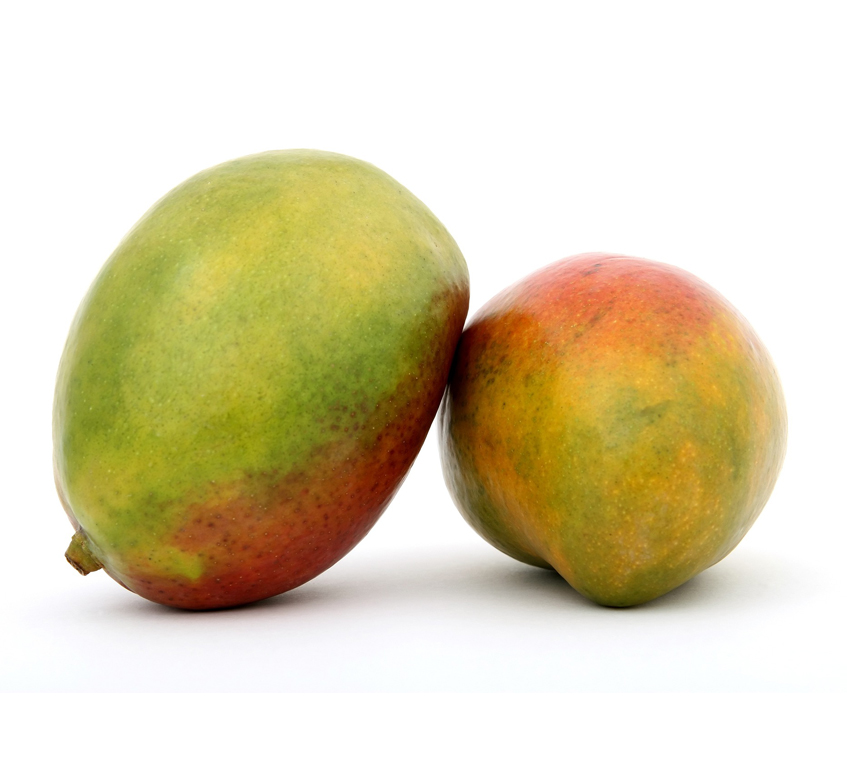
Formulating a fruit flavor would be very simple, if we could describe the taste through language. Let’s imagine an explorer who returns from Africa in the 16th century and who wants to explain the flavor of the mango to his contemporaries. The thing may make you laugh, but very quickly, he realizes that there is no vocabulary specific to the description of aromatic notes.
If we want to describe a color, we have 3 main colors. Any other color is obtained by a mixture of these. If a similar tool existed for flavors, then we could communicate about aromas, describe them and therefore facilitate their formulation.
It is therefore necessary to have a common base of knowledge within a population for everyone. In this case, our explorer can talk about the mango in these terms. The fruit is oval in shape, approximately 15 to 20 cm long depending on the species.
Its skin, inedible, covers orange-yellow flesh, inside which there is an ovoid core. The flesh is sweet, very little acidic, stringy and juicy while remaining firm, but not too firm. Its taste is reminiscent of peach with a coconut undertone, a resinous terpene taste and a pronounced exotic note that does not exist in our local fruits.
The description of the fruit is based on sequencing into simple aromatic notes known to everyone. The limitation of this method is obvious , we have a primary language with few words.
But this exercise opens up unexplored horizons. An aromatic note is an association of molecules. Consequently, if we expressed ourselves with defined chemical compounds instead of known fruits, we would multiply the number of descriptors.
Peach is more precisely referred to as trans 2-hexenyl acetate, cis 3-hexenol, hexyl acetate, linalool and gamma decalactone. The firm fruit just reaching maturity translates into cis-6 trans-2 nonadienal, a molecule with a cucumber odor but which in extreme dilution suggests the barely ripe fruit.
The coconut scent is expressed by gamma octalactone, gamma nonalactone or delta decalactone. The sensation of sugar is restored by furaneol, associated with traces of methional. Very precisely, the terpene taste can be characterized by the presence of terpinolene, myrcene or pinene. The exotic note is expressed very precisely by the sulfur compounds, 3-methylthiohexanol or its acetate or the pulpy, green, tropical fruit note of cis 3-hexenyl caproate.
The descriptors available are more numerous and in fact becoming more precise. The language used is universal. We express ourselves in the language of the flavor chemist. With 1500 words (molecules), you can accurately describe all fruits to someone who speaks the same language. You are simply formulating.